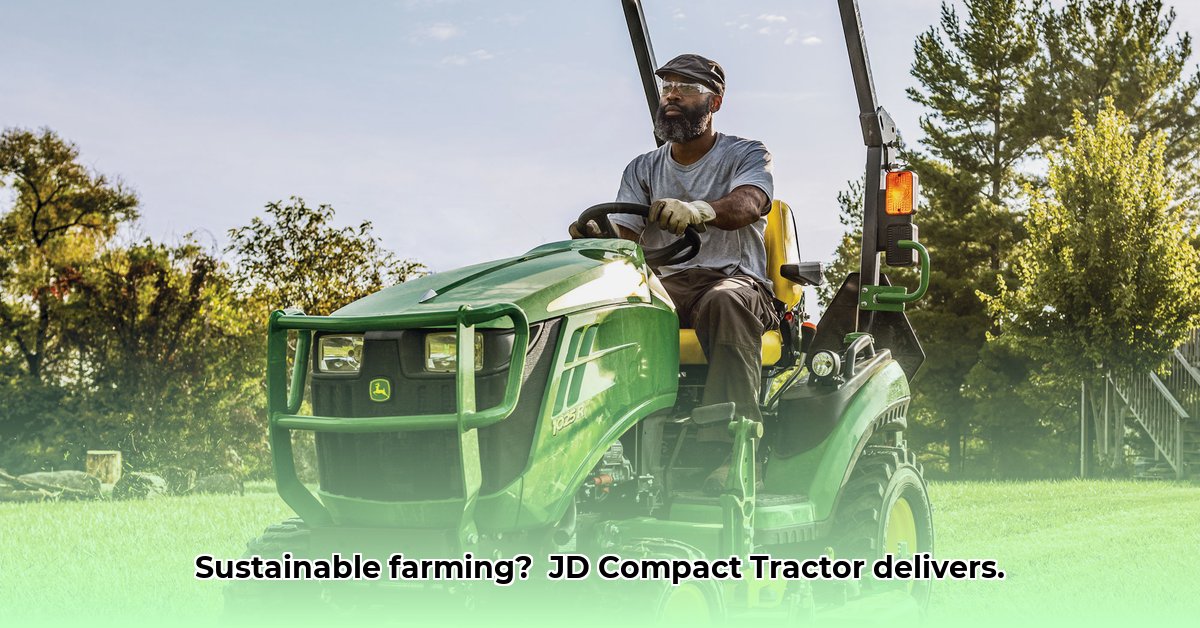
Power and Performance: Matching Machine to Task
John Deere's compact utility tractors offer a range of horsepower and lift capacities to suit diverse farming and landscaping needs. Models span from approximately 21.5 to 75 horsepower, with corresponding lift capacities ranging from 754 to 2222 pounds. Transmission options include hydrostatic (smooth, easy operation) and geared (precise control). The 4 Series, for example, includes the PowrReverser™, facilitating quick direction changes, a significant advantage in tight spaces. But how do these specs translate to real-world efficiency? A detailed analysis comparing fuel consumption across models under identical working conditions would offer more concrete insights. For a comparison of other brands, check out Kubota's offerings.
Sustainability Assessment: A Critical Gap
While Deere highlights the capabilities of its compact tractors, crucial data on environmental impact remains elusive. Specific figures on fuel efficiency (gallons per hour) and emissions (CO2, NOx, particulate matter) are notably absent from readily available marketing materials. This lack of transparency hinders informed decision-making for farmers prioritizing sustainable practices. How can we truly assess the environmental footprint without this information? To bridge this knowledge gap, independent studies and increased transparency from Deere are crucial. We need lifecycle assessments detailing the environmental impact from manufacturing to disposal to provide farmers an accurate comparative analysis.
Implement Compatibility and Ease of Use: Maximizing Efficiency
Deere's iMatch™ Quik-Hitch system simplifies implement changes, minimizing downtime between tasks. This user-friendly feature significantly boosts efficiency, translating directly into cost savings. Ergonomic design elements and integrated controls further enhance the user experience, reducing operator fatigue and improving overall productivity. But are there comparable systems available from competitors offering similar or superior benefits? A comparative analysis would be valuable.
Economic and Operational Considerations: Total Cost of Ownership (TCO)
The total cost of ownership (TCO) extends far beyond the initial purchase price. Consider fuel consumption, which directly impacts operating costs. Regular maintenance schedules and potential repair costs must also be factored in. The resale or trade-in value of the tractor at the end of its operational life should also be assessed. A comprehensive TCO analysis, incorporating all these factors, is vital for informed purchasing decisions. Are financing options available to spread the upfront investment? What are the typical maintenance intervals and the average cost of parts? This information is crucial for accurate TCO calculations.
Risk Assessment and Mitigation: Planning for Contingencies
Farming involves inherent risks. The following matrix highlights potential issues and mitigating strategies:
| Risk Factor | Probability | Impact | Mitigation |
|---|---|---|---|
| Engine Malfunction | Medium | High | Regular scheduled maintenance, extended warranty consideration |
| Hydraulic System Failure | Medium | Medium | Preventative maintenance, readily available repair service |
| Implement Incompatibility | Low | Low | Verify compatibility before purchase; prioritize Deere implements |
| Operator Error | High | Medium | Comprehensive operator training; adherence to safety protocols |
| Environmental Impacts | Unknown | High | Demand data transparency from manufacturers; support independent emission testing |
Regulatory Compliance: Navigating the Legal Landscape
Agricultural machinery is subject to various regulations concerning safety and emissions (Tier 4 Final standards, for example). Staying abreast of these, which vary by location, is essential for legal and responsible operation. Failure to comply can result in fines or operational restrictions. Therefore, it's vital to check local regulations before purchasing any tractor to ensure compliance. Consult your local agricultural extension office for the most up-to-date information on regulations in your specific region.
Conclusion: Transparency and Sustainable Practices
John Deere's compact utility tractors offer strong performance and user-friendly features. However, a lack of readily available environmental data remains a significant limitation. Until Deere and the wider agricultural machinery industry provide more comprehensive sustainability reports – including detailed fuel efficiency and emissions data – farmers will struggle to make truly informed choices. This lack of information significantly impacts the ability to assess the long-term sustainability of these investments. Collaboration between manufacturers, researchers, and policymakers is essential to improve data availability and promote environmentally conscious agricultural practices.
For Farmers: Prioritize TCO analysis, invest in operator training and seek out independent sources for environmental impact data.
For Deere: Enhance transparency by publishing detailed sustainability reports and consider developing emission-reducing technologies such as electric or hybrid models.
For Policymakers: Support robust emission standards and incentivize sustainable agricultural practices through targeted subsidies and grants.